1
01:00:05,039 --> 01:00:08,920
Welcome to the second of our video resources
that have been developed to support
2
01:00:08,920 --> 01:00:11,840
organisations working in children's
social care to
3
01:00:11,840 --> 01:00:15,440
understand how they can embed a value-based
approach into recruitment.
4
01:00:16,559 --> 01:00:20,719
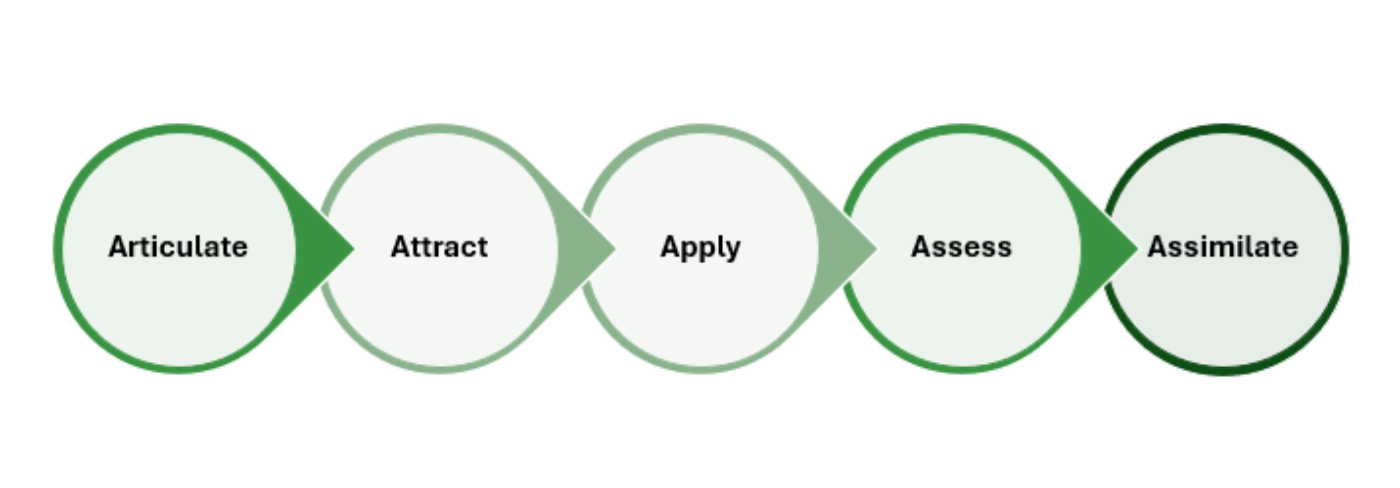
In this video, we will focus on the first
of the five A's, articulate.
5
01:00:21,760 --> 01:00:25,360
We will take you through how you can develop
and communicate the values and
6
01:00:25,360 --> 01:00:28,880
behaviours you are looking for when recruiting
the right people in your setting.
7
01:00:30,159 --> 01:00:34,360
Articulating your values and culture enables
you to describe what is the unique
8
01:00:34,360 --> 01:00:37,960
personality of your setting and
what matters most when
9
01:00:37,960 --> 01:00:40,679
doing the work you do with children
and young people.
10
01:00:41,519 --> 01:00:43,559
This is important for a
number of reasons.
11
01:00:44,320 --> 01:00:48,199
It describes the unique culture of your
organisation or setting to potential
12
01:00:48,199 --> 01:00:51,639
recruits, enabling you to attract
staff who share your values.
13
01:00:52,679 --> 01:00:57,719
It contributes to inclusivity by attracting
a more diverse range of staff who may
14
01:00:57,719 --> 01:01:01,320
not have experience of care work but
who do share your values.
15
01:01:02,400 --> 01:01:06,440
It enables you to focus your assessment and
interview process on the values and
16
01:01:06,440 --> 01:01:08,239
behaviours that matter to
children and young
17
01:01:08,239 --> 01:01:10,639
people and to the culture
of your workplace.
18
01:01:11,679 --> 01:01:15,599
And it contributes to the retention of great
staff who feel connected to your
19
01:01:15,599 --> 01:01:19,679
vision and values and culture and understand
how they can make a difference in
20
01:01:19,679 --> 01:01:21,920
their work with children
and young people.
21
01:01:23,280 --> 01:01:25,559
Before we look at how to articulate
your values,
22
01:01:25,920 --> 01:01:29,480
it's helpful to think about what
values actually are.
23
01:01:29,880 --> 01:01:32,800
Values are sets of beliefs
that an individual or
24
01:01:32,800 --> 01:01:35,679
an organisation holds about
what is important.
25
01:01:36,960 --> 01:01:42,400
I like to think about values as a sort of
compass that helps you to decide what to
26
01:01:42,400 --> 01:01:44,960
do and guide your actions
and your behaviour.
27
01:01:46,280 --> 01:01:49,119
Values are the how that
guide what you do.
28
01:01:50,480 --> 01:01:54,760
Values are part of what make up the culture
of your workplace, and by culture we
29
01:01:54,760 --> 01:01:58,639
mean the character and personality of your
organisation and what makes it unique.
30
01:01:59,679 --> 01:02:05,039
You can have two organisations or settings
who do exactly the same thing but how
31
01:02:05,039 --> 01:02:07,800
they do things defines their
unique culture.
32
01:02:09,360 --> 01:02:13,280
And knowing and articulating your culture
and values is a very important part of
33
01:02:13,280 --> 01:02:18,079
your recruitment process as it signals at
the very start of the process what your
34
01:02:18,079 --> 01:02:20,559
expectations are of staff
who work for you,
35
01:02:21,360 --> 01:02:23,639
what it will feel like to be
part of your setting or
36
01:02:23,639 --> 01:02:27,440
organisation and what you value and
recognise in your staff.
37
01:02:28,639 --> 01:02:33,639
As part of the value based recruitment toolkit
for children's residential social care,
38
01:02:33,639 --> 01:02:37,920
we developed an example set of values
for residential childcare settings
39
01:02:37,920 --> 01:02:41,320
based on the Social Care Wales
practice guidance.
40
01:02:43,079 --> 01:02:47,800
Common values we identified included child-centred,
respect and compassion,
41
01:02:48,480 --> 01:02:51,360
integrity and responsibility
and teamwork.
42
01:02:52,719 --> 01:02:56,559
Perhaps you could take a moment to reflect
on how these values are similar or
43
01:02:56,559 --> 01:03:00,119
different to the sorts of values
in your setting and how
44
01:03:00,119 --> 01:03:02,880
these values currently link into
your recruitment process.
45
01:03:04,320 --> 01:03:08,280
For each of the values that you identify as
being important in your setting, it's
46
01:03:08,280 --> 01:03:12,920
helpful to also develop a set of behaviours
which can describe to potential and
47
01:03:12,920 --> 01:03:15,960
existing staff what those
values look like
48
01:03:15,960 --> 01:03:18,639
when put into practice in
people's daily work.
49
01:03:19,440 --> 01:03:24,280
For example, let's look at the value of respect
and compassion. Some behaviours
50
01:03:24,280 --> 01:03:28,800
that you might include to describe what
respect and compassion looks like in
51
01:03:28,800 --> 01:03:34,239
practice could be being authentically
warm, kind, empathic, reliable and
52
01:03:34,239 --> 01:03:37,000
compassionate to everyone we
work with and support.
53
01:03:38,199 --> 01:03:42,880
Another behaviour could be respecting children
and young people's rights while
54
01:03:42,880 --> 01:03:46,679
seeking to ensure that their behaviour does
not harm themselves or other people.
55
01:03:48,039 --> 01:03:52,199
In the Toolkit, we have also provided an
example of a values and behaviours
56
01:03:52,199 --> 01:03:57,239
framework based on these four values so you
can visualise what it could look like
57
01:03:57,239 --> 01:04:01,159
in your organisation and perhaps reflect
on what you already have in place.
58
01:04:02,679 --> 01:04:06,760
Having a values and behaviours framework,
which perhaps could include four or five
59
01:04:06,760 --> 01:04:11,199
of the most important values you want to
see staff displaying and also a set of
60
01:04:11,199 --> 01:04:14,079
four or five behaviours under
each of the values,
61
01:04:14,079 --> 01:04:16,599
is the first step in putting
a value-based
62
01:04:16,599 --> 01:04:19,960
recruitment approach into recruitment
in your organisation.
63
01:04:21,400 --> 01:04:25,480
Without this values and behaviours framework,
it's difficult to clearly share with
64
01:04:25,480 --> 01:04:27,719
potential recruits what you
are looking for
65
01:04:27,719 --> 01:04:29,800
in your advert and your application
process.
66
01:04:30,519 --> 01:04:35,239
And when you are assessing and selecting staff,
without a clear vision of what the
67
01:04:35,239 --> 01:04:37,960
values and behaviours you are
looking for are, you
68
01:04:37,960 --> 01:04:40,639
cannot be sure you will be selecting
the right people.
69
01:04:41,719 --> 01:04:46,360
So we will now move on to share some ideas
about how you can develop your own
70
01:04:46,360 --> 01:04:48,519
values and behaviours framework
as the first
71
01:04:48,519 --> 01:04:50,679
step in your value-based recruitment
journey.
72
01:04:52,079 --> 01:04:56,360
Let's first share some ideas about what
you can do if you don't already have a
73
01:04:56,360 --> 01:04:59,239
values and behaviours framework
in your organisation.
74
01:05:00,480 --> 01:05:04,400
You could start by using the example values
and behaviours framework in the toolkit
75
01:05:04,400 --> 01:05:08,599
to think about how each of these values
and behaviours could apply to your
76
01:05:08,599 --> 01:05:12,239
workplace culture and the expectations
you have of your staff.
77
01:05:13,159 --> 01:05:19,280
The most effective way to develop values that
staff buy into is to involve them and
78
01:05:19,280 --> 01:05:22,239
the children and young people in
developing values with you.
79
01:05:23,000 --> 01:05:26,800
So you should find different ways to involve
and include your staff and the
80
01:05:26,800 --> 01:05:30,440
children and young people in discussing the
values and behaviours that matter most
81
01:05:30,440 --> 01:05:33,360
to them in your setting and to
get their feedback and
82
01:05:33,360 --> 01:05:36,760
input into making a framework that
is relevant to your setting.
83
01:05:38,400 --> 01:05:42,679
You could do this by running focus groups,
doing some fun activities with children
84
01:05:42,679 --> 01:05:47,519
looking at where values look and feel like
to them and perhaps sharing the example
85
01:05:47,519 --> 01:05:52,320
framework and then asking them for ideas about
how to make it work in your setting.
86
01:05:53,760 --> 01:05:57,920
It's important to ensure the values and behaviours
framework you produce reflects
87
01:05:57,920 --> 01:06:02,559
and describes the culture of your organisation
in language that means something to
88
01:06:02,559 --> 01:06:06,639
staff and children and young people and that
they could use on a day-to-day basis.
89
01:06:06,679 --> 01:06:11,159
So involve staff and children and young people
in coming up with their own language
90
01:06:11,159 --> 01:06:15,639
to describe the sorts of behaviours that staff
display at work when they are living
91
01:06:15,639 --> 01:06:18,360
the values and making a positive
difference to
92
01:06:18,360 --> 01:06:20,199
the children and young people
they work with.
93
01:06:21,320 --> 01:06:25,280
To help with this thinking, I'll share
an activity I often use.
94
01:06:25,920 --> 01:06:30,559
I give groups magazines and newspapers
and I ask them to create collages of
95
01:06:30,559 --> 01:06:34,519
pictures to show the sorts of behaviours
that they feel are important.
96
01:06:34,760 --> 01:06:39,360
And then I ask them to put words to each
picture using language that they can
97
01:06:39,360 --> 01:06:41,920
relate to, which describes the behaviour.
98
01:06:43,679 --> 01:06:47,320
Next, think about how you can ensure that
your leaders and managers are committed
99
01:06:47,320 --> 01:06:51,679
to adopting and using the values and behaviours
framework and the language of the
100
01:06:51,679 --> 01:06:54,639
values when managing staff
and making decisions.
101
01:06:55,679 --> 01:07:00,239
Values and behaviours can't just be wallpaper.
They have to be lived and used every
102
01:07:00,239 --> 01:07:03,159
day so they become a meaningful
part of your culture.
103
01:07:04,519 --> 01:07:07,960
And once you've developed your values and
behaviours framework, you then need to
104
01:07:07,960 --> 01:07:11,800
plan how will you communicate and share the
new values and behaviours, both with
105
01:07:11,800 --> 01:07:14,559
your existing staff and with children
and young people.
106
01:07:16,000 --> 01:07:20,880
Think about all the different ways, places
and opportunities you have to share the
107
01:07:20,880 --> 01:07:25,079
new values in ways that people will
see and hear it at work.
108
01:07:25,880 --> 01:07:30,000
It is important to continually keep coming
back to the values until they just
109
01:07:30,000 --> 01:07:34,000
become part of the language and the way
things are done in your organisation.
110
01:07:35,480 --> 01:07:39,639
Then when you feel you have developed a set
of values that are right for you, plan
111
01:07:39,639 --> 01:07:43,400
how to start to embed the new values and
behaviours into all aspects of your
112
01:07:43,400 --> 01:07:48,280
recruitment and management processes using
the 5A's value-based recruitment model.
113
01:07:49,800 --> 01:07:53,760
But what should you do if your organisation
already has a separate corporate values
114
01:07:53,760 --> 01:07:56,760
that may or may not be fully
reflective of
115
01:07:56,760 --> 01:07:59,159
your setting or area of the organisation?
116
01:07:59,679 --> 01:08:02,960
Or what if you have got a set
of values for your
117
01:08:02,960 --> 01:08:06,480
setting but you feel you want to review
them or improve them?
118
01:08:07,719 --> 01:08:12,360
If your organisation has a set of corporately
agreed values that you need to work
119
01:08:12,360 --> 01:08:17,359
with, that does not stop you from adapting
or adding in some specific values that
120
01:08:17,359 --> 01:08:20,640
are relevant to your work and the work you
do with children and young people.
121
01:08:21,720 --> 01:08:26,439
These values and behaviours could specifically
be used just for recruitment or you
122
01:08:26,439 --> 01:08:30,560
could hopefully use them as part of the way
in which you induct, train, supervise
123
01:08:30,560 --> 01:08:33,079
and manage your staff by
using the existing
124
01:08:33,079 --> 01:08:37,119
organisational processes but including
an element of your own values.
125
01:08:37,720 --> 01:08:41,239
We will look at how this can work in the
next videos where we will look at
126
01:08:41,239 --> 01:08:43,079
different stages of the recruitment
process.
127
01:08:44,800 --> 01:08:48,960
If you already have a set of values and behaviours
for your setting, you could use
128
01:08:48,960 --> 01:08:53,520
the example framework we have provided in
the toolkit to look at how your values
129
01:08:53,520 --> 01:08:58,640
align to the example values and identify ways
in which you could articulate them in
130
01:08:58,640 --> 01:09:00,800
a clear, more relevant way
for your setting.
131
01:09:01,880 --> 01:09:06,560
You could reflect on are there any gaps and
are there any values or behaviours you
132
01:09:06,560 --> 01:09:08,399
could add to your framework
to enhance it.
133
01:09:09,520 --> 01:09:13,239
Once you have updated your framework, you
should then share it with leaders and
134
01:09:13,239 --> 01:09:15,760
managers and ensure they share
the same language
135
01:09:15,760 --> 01:09:18,119
and feel committed to embedding
it in your setting.
136
01:09:19,279 --> 01:09:23,000
And then you could take time to reflect
on what have you already done to
137
01:09:23,000 --> 01:09:25,960
communicate and share your framework
with existing staff,
138
01:09:26,319 --> 01:09:29,079
staff you are recruiting and with
children and young people.
139
01:09:29,880 --> 01:09:32,880
Do you think you could do anything more to
communicate the values and behaviours
140
01:09:32,880 --> 01:09:35,279
clearly to staff and to children
and young people?
141
01:09:35,960 --> 01:09:38,479
And are the values and behaviours
currently being used in
142
01:09:38,479 --> 01:09:41,880
the most effective ways when you
recruit and manage staff?
143
01:09:43,640 --> 01:09:48,439
So we want to finish this video with some top
tips and some reflection questions to
144
01:09:48,439 --> 01:09:51,199
hopefully inspire and support
you in articulating the
145
01:09:51,199 --> 01:09:53,439
values and behaviours that matter
in your workplace.
146
01:09:54,479 --> 01:09:57,880
So top tip one, involve staff and young
147
01:09:57,880 --> 01:10:00,840
people and children in developing
your values.
148
01:10:01,840 --> 01:10:05,960
Top tip two, for each value also
describe the behaviours
149
01:10:05,960 --> 01:10:09,600
staff would show when they were living
each value in their work.
150
01:10:10,239 --> 01:10:14,840
And top tip three, communicate your values
internally with staff and externally
151
01:10:14,840 --> 01:10:19,640
with candidates at every opportunity so they
know why they should work for you.
152
01:10:20,960 --> 01:10:24,399
And here are three questions that
you could reflect on.
153
01:10:26,439 --> 01:10:28,640
What have you learnt today
about the values and
154
01:10:28,640 --> 01:10:30,720
behaviours that are important
in your setting?
155
01:10:31,920 --> 01:10:36,439
Are these values and behaviours clearly articulated
to new and existing staff in
156
01:10:36,439 --> 01:10:40,960
your setting in the advert, job descriptions,
induction and training?
157
01:10:42,279 --> 01:10:47,119
And thirdly, what do you need to do next to
ensure that you are clear on the values
158
01:10:47,119 --> 01:10:51,079
and behaviours you expect from staff so
that you can build a value based
159
01:10:51,079 --> 01:10:54,199
recruitment approach that can
identify those values?
160
01:10:55,640 --> 01:10:59,319
Thank you for taking the time to watch
this video and to learn about how to
161
01:10:59,319 --> 01:11:02,560
articulate the values that matter
in your organisation.
162
01:11:03,520 --> 01:11:08,880
Join us in the next video where we will learn
how to explore and embed values in
163
01:11:08,880 --> 01:11:11,520
your candidate attraction and
application process.